If your home was built between the 1950s and the 1980s, there is a real chance your electrical panel is a Federal Pacific or Zinsco model. Both have a poor safety reputation. The main worry is that their breakers may fail to trip when a circuit is overloaded, which is the one job a breaker must do.
Why electricians worry about these panels
Federal Pacific Electric (FPE) panels with “Stab-Lok” breakers were installed in thousands of North Texas homes in the 1960s, 1970s and early 1980s. NBC 5 Dallas-Fort Worth reported that an engineer’s study of nearly 1,500 of these breakers found about one in four failed to trip when overloaded. The company is no longer in business, and the panels were never formally recalled. Federal regulators closed their 1983 investigation without ruling on whether the breakers were safe.
Zinsco panels, also sold under the Sylvania and GTE-Sylvania names, are widely flagged by inspectors and electricians for similar breaker problems.
What a breaker is supposed to do
A circuit breaker is a safety switch. Every wire in your walls can carry only so much current before it heats up. If too much current flows, because a circuit is overloaded or a wire shorts, the breaker should trip and cut the power before the wire gets hot enough to damage its insulation or start a fire.
Most breakers do this reliably for decades. The concern with Federal Pacific and Zinsco equipment is that some of their breakers may not do it when it counts, and you cannot tell by looking. When a breaker fails to trip, the wiring inside your walls is left to absorb the overload on its own.
How to tell which panel you have
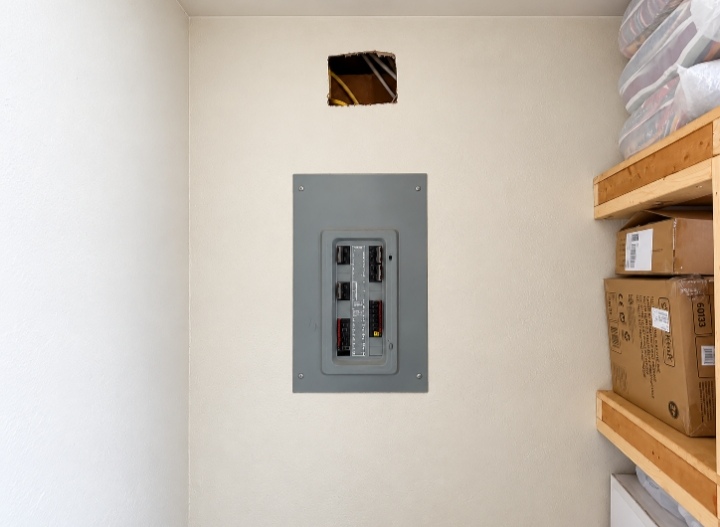
You can check without removing any covers. Open the panel door and read the labels and breaker handles. Never take off the inner metal cover.
- A label that reads “Federal Pacific”, “FPE”, “Federal Pioneer” or “Stab-Lok”.
- Breaker switches with a red line or stripe across them.
- A label that reads “Zinsco”, “Sylvania” or “GTE-Sylvania”.
- A home built roughly between 1950 and 1990.
A Dallas home inspector told NBC 5 that he often finds Federal Pacific panels in Lake Highlands, Oak Cliff, Highland Park, Garland and other neighborhoods with homes from that era.
Warning signs to act on
- A burning smell, buzzing or crackling near the panel.
- Scorch marks, rust or discoloration on the panel or breakers.
- Breakers that feel hot, feel loose, or will not reset.
- Flickering lights or outlets that lose power.
- A circuit or cord that overheats while its breaker never trips.
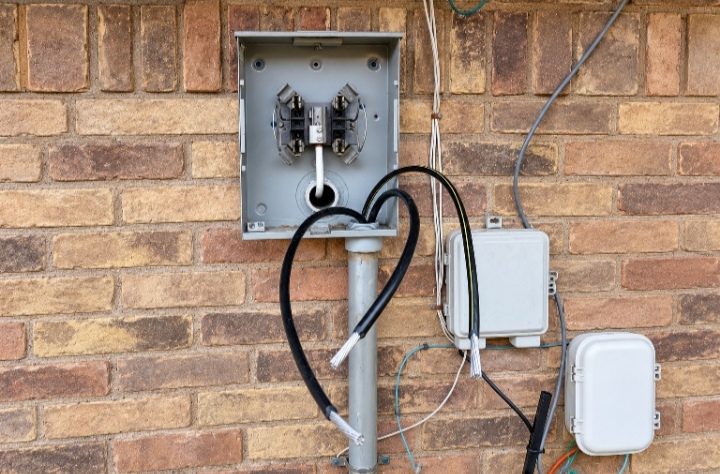
If you see flames, smoke or sparks at the panel, get everyone out and call 911.
What to do if you find one
Finding one of these panels is a reason to plan, not to panic. Here is a sensible order of steps:
- Leave the inner cover alone. Do not remove the metal cover or touch anything inside the panel.
- Take photos. Photograph the panel door, the label and the breaker handles so you can share them with an electrician.
- Go easy on the circuits. Avoid plugging several high-power appliances, such as space heaters, into the same circuit.
- Get it evaluated. Ask a licensed electrician to confirm what you have and to inspect the condition of the panel.
- Compare written quotes. Get two or three quotes for a full panel replacement, and ask each one to include the permit and inspection.
- Schedule the replacement. Replace the panel soon, and do not wait for a warning sign to force the issue.
A panel can look fine and still be a risk
A Federal Pacific or Zinsco panel can work for years without any visible problem, because the failure only shows up when a breaker is needed. That is why many electricians recommend replacing the panel based on the brand alone, even when nothing seems wrong.
Why replacing one breaker is not enough
Swapping individual breakers usually does not solve the problem, because the panel itself is the concern. Most electricians recommend replacing the whole panel with a modern, listed one.
Common myths
“My breakers trip fine, so I’m safe.” Researchers who studied these breakers say a unit that appears to work can still fail to trip when it really counts. Seeing a breaker trip once does not prove it will protect you the next time.
“It has worked for 40 years.” That is true of many of these panels, but the failure only shows up at the worst moment. A long record without trouble is not proof that the breakers will protect you.
“I will just replace the bad breaker.” Replacing a single breaker does not address the panel itself, which is where electricians see the problem.
“If it were dangerous, it would have been recalled.” The panels were never formally recalled. The federal agency that investigated closed the matter in 1983 without a safety ruling, which is different from declaring them safe.
Other older panels worth checking
Federal Pacific and Zinsco are the best-known names, but they are not the only older equipment worth a second look. Some city and inspector guidance also lists Challenger and Pushmatic panels among the brands to have evaluated. If your panel is more than 30 or 40 years old, shows rust or scorching, or has breakers that feel loose, ask an electrician to inspect it whatever the brand.
Insurance and selling your home
Home inspectors often flag these panels, and some insurers ask about them, so a home sale or policy renewal can bring the issue up. Replacing the panel before that happens gives you time to plan and compare quotes.
What replacement involves
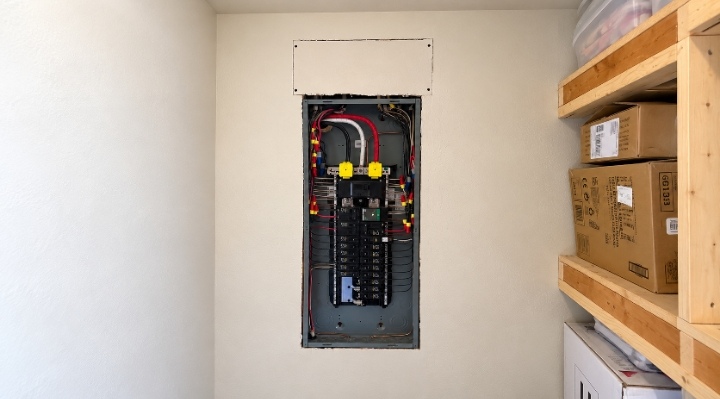
A licensed electrician installs a new panel and breakers, moves each circuit over, and arranges the permit and inspection. Most panel replacements take about four to eight hours, with the power off for part of the day.
Questions homeowners ask
How much does a replacement cost? Typical 2026 ranges are about $1,200 to $2,000 to swap an old panel for a new one of the same size, and about $2,000 to $3,500 to upgrade to 200 amps. Your price depends on your home, so get a written quote. Our guide to 200-amp upgrade costs explains what moves the price.
Can I sell a home that has one? Usually yes, but a buyer’s inspector will probably flag it, and the buyer may ask for a replacement or a lower price. Replacing the panel before you list can remove that negotiating point. Ask your real estate agent how it tends to play out in your area.
Is it safe to keep using it until I replace it? Many homes use these panels every day, but the risk is real. Avoid overloading circuits, watch for the warning signs above, and schedule the replacement soon. An electrician can advise on interim steps for your situation.
Do I need a permit to replace a panel? Yes. Panel replacement is permitted and inspected work, and your licensed electrician arranges both.
Get your panel checked
Not sure what you have? Kravolt Electric is a licensed electrical contractor (TECL #40613) serving Dallas, Mesquite, Garland and nearby neighborhoods. Call 214-222-0320 or request a free estimate, and we will tell you which panel you have and what replacing it involves. Financing is available for larger projects.